 Eyeball It
Estimation tips
How to guess how many things are in a picture
Eight seconds is not enough to count 88 gumballs. It is enough to estimate them well. These methods work in Eyeball It, and in a jar-guessing contest.
1. Count a small patch, then multiply
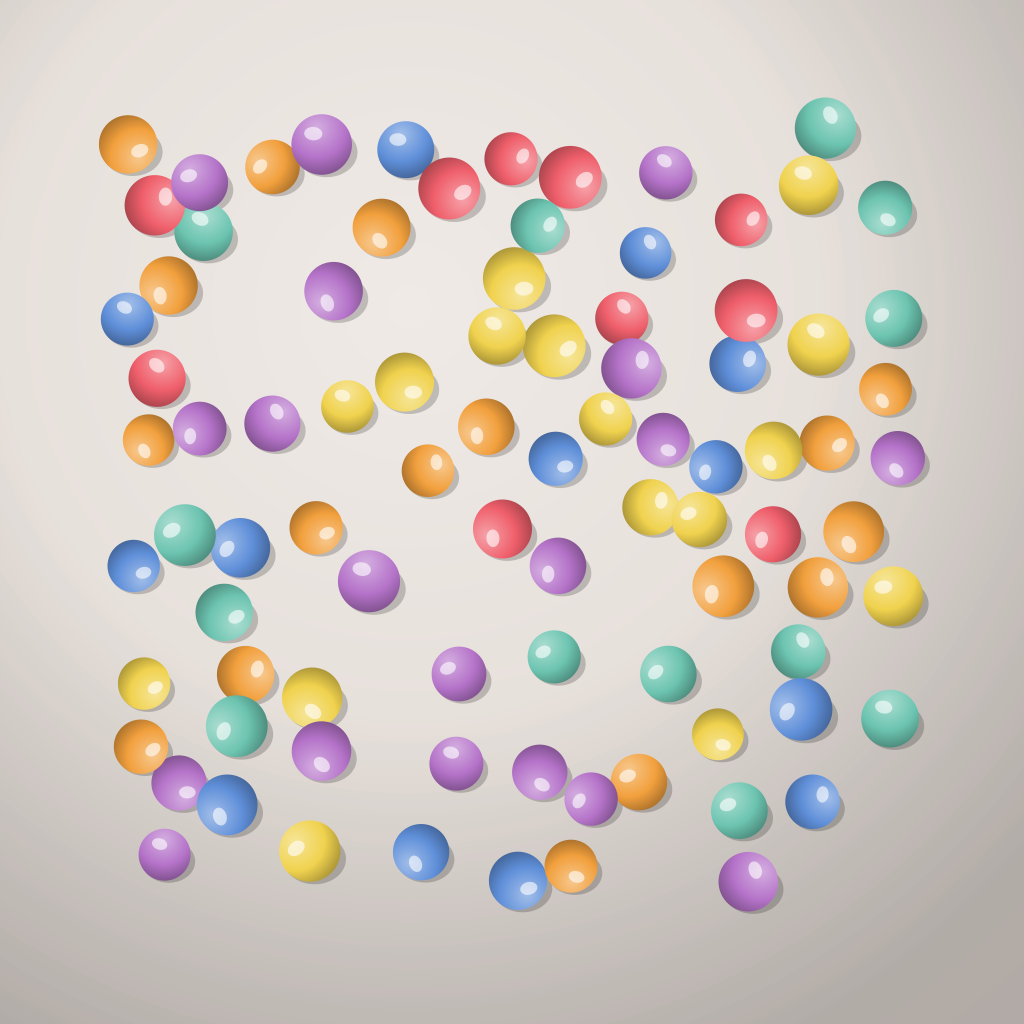
Pick a patch with about 10 pieces and count those. Then ask how many patches that size would cover the whole pile.
Here the patch holds 11, and eight patches cover the pile. 11 × 8 = 88. The real count is 88. If you only learn one method, learn this one.
2. Split the picture into quarters
Draw an imaginary cross through the middle. Estimate one quarter and multiply by four.
The top-left quarter holds 22, and 22 × 4 = 88. The other quarters hold 25, 20, 21, so even the least typical one lands within 12 of the truth. Piles are rarely even, so pick the quarter that looks most typical.
3. Read the size of the pieces
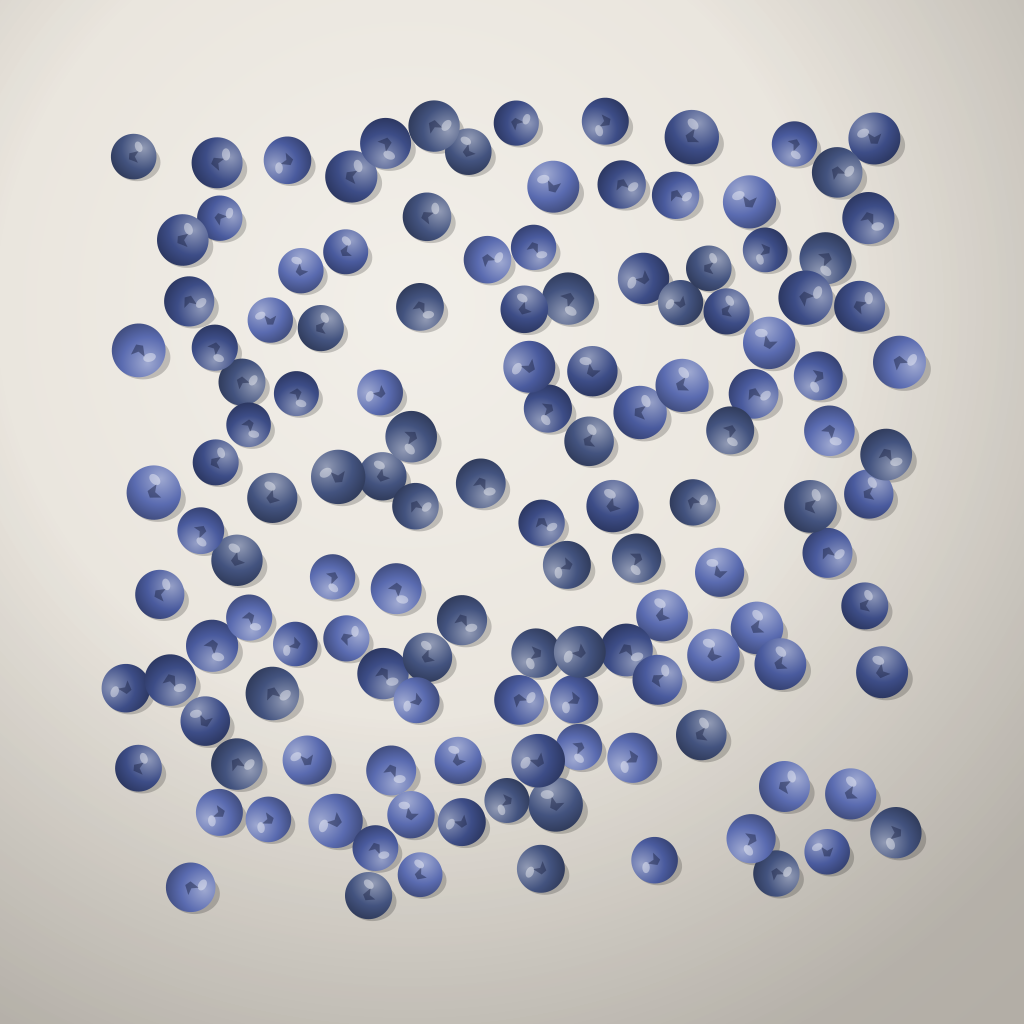
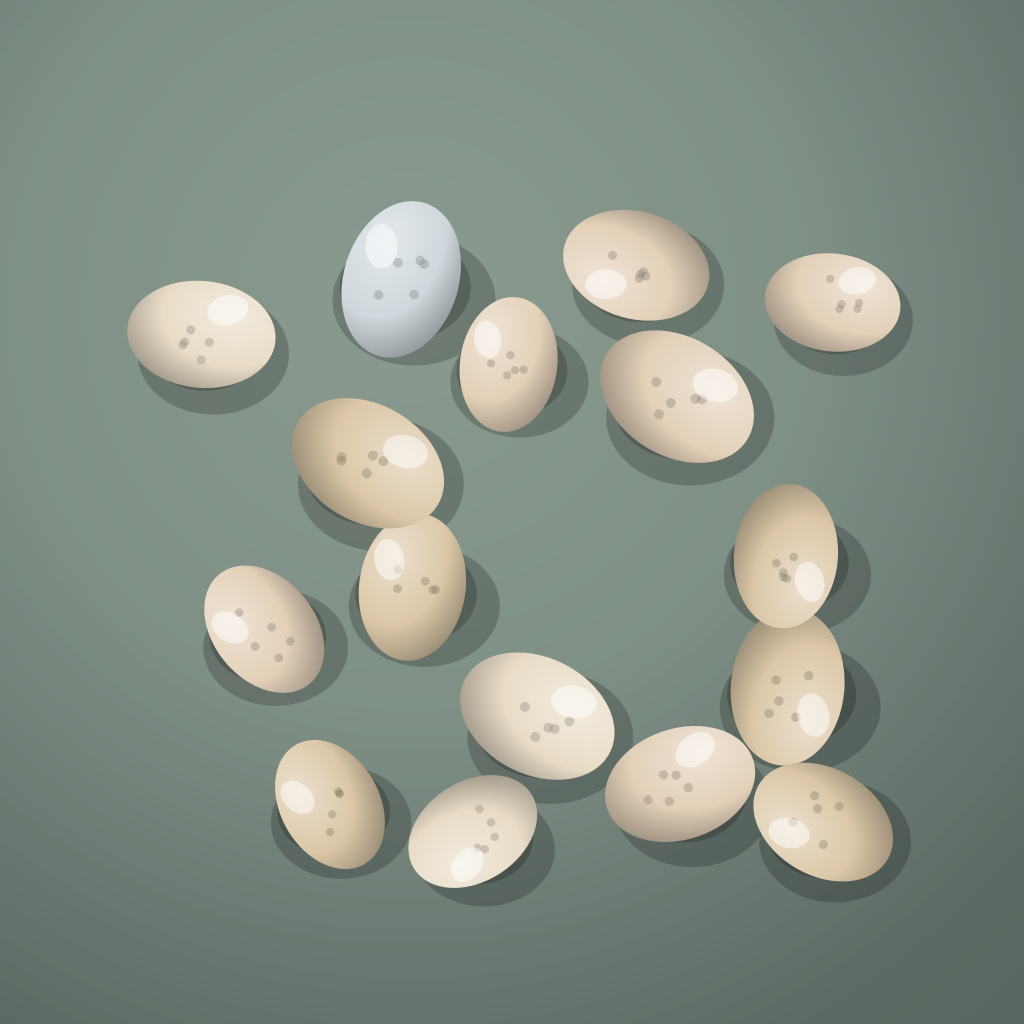
In Eyeball It a pile always covers about the same share of the picture, so more pieces means each one is drawn smaller. Both piles above fill about the same space. One holds 132, the other 16. Tiny pieces packed edge to edge mean a big number. Check the size before you trust your first impression.
4. Correct for guessing low
People tend to underestimate large amounts. A 2008 study by Véronique Izard and Stanislas Dehaene found that people shown big sets of dots guessed too low, and that seeing one example with the true number was enough to fix most of it. If your gut says 80 on a big pile, try 90.
5. Calibrate with practice
That fix works for you too. Play a few rounds of practice and write down whether you land high or low after each reveal. If you are low four times out of five, add a tenth to your gut answer and see if your scores go up.
Know what a miss costs
Scoring is by percentage, so the same mistake costs more on a small pile. On small piles, slow down and get close. On big piles, a fast estimate in the right range is worth more than a careful count you cannot finish.
| Pile | Off by | Score |
|---|---|---|
| 25 | 5 | 80 |
| 60 | 5 | 92 |
| 125 | 5 | 96 |
The full rules are on How to play.